Welcome to my birding blog - first launched 12th March 2012...
Thursday 26th July 2012
Seawatching
At Flamborough Head. All photos taken on the day within 25m of my folding chair - for which I was very grateful. Barry drove us there and back and I had a relaxing day recovering after a rather frightening fall in the garden the day before. Any way the day went well: three year ticks in the form of manx and sooty shearwaters and arctic skua. Also seen were great skua [bonxie] and common scoters - along with other common seabirds.

 A form of daucus carota [wild carrot] covered in soldier beetles.
I took quite a lot of photos of great black-backed gulls.


The skuas and shearwaters were too distant for the camera. A heavy crop or two captured the scoters, cormorants and the gannets out in the bay.


 Fulmars came closer...
 ...and puffins could be seen below us on the water.
 The day cooled a little. Some of the other birders didn't just have chairs, they had very smart sport-brellas. £50 from Amazon apparently.
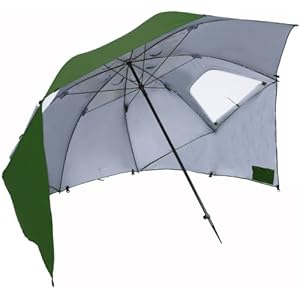
It seems to my statistically inexpert eye that the kittiwakes have had a good year. There are many pretty juveniles about.

 Just below us a pair of herring gulls were feeding young. Mum [or dad] is just flying in here.
 Finally I spotted to our right a linnet on the cliff top singing. A long way off from the comfort of my chair but here he is - last shot of the day.
 249 UK; Yorkshire 120
Wednesday 25th July 2012: Moth trap
I made a moth trap!
I found some help on the internet at http://www.meades.org/moths/moths.html#Trapping_Moths. See this website for the method - although I did a few things my own way.
Basically you need the following:
· One sheet of 5mm or 6mm plywood cut into:
- one 40 cm square – base,
- two 30 cm x 40 cm - ends,
- two 30 cm x 39 cm - sides,
- one 7 cm x 39 cm - support for light.
· One sheet of 2 mm Perspex [I used horticultural glass] cut into:
- two 30 cm x 39 cm,
- [one 30 cm x 30 cm for rain cover if desired.]
· 2 cm square baton cut into:
- two 35 cm lengths - at bottom of ends,
- two 39 cm lengths - at bottom of sides,
- four 25 cm lengths - along edges,
- four 6.5 cm lengths - two for Perspex/glass support, two for light.

Perhaps I'll catch one of these. This is an angle shades moth from our garden.
Here's a couple of iphotos of the trap.


After the first night of trapping using the little halogen bulb, I had caught these moths plus some other micro moths that flew off! Many thanks to moremoth and chrisbrooks from ispot for the identifications.


Scalloped oak: crocallis elinguaria
Riband wave - non banded form: idaea aversata ab. remutata
 Gothic: naenia typica

Species unknowm
Sunday 22nd July 2012
A wild goose chase
Semipalmated sandpiper reported at Nosterfield mid-morning. Not a lifer but a top drawer bird. Scampered up the A1M. Saw the bird. Didn't look dark enough compared with others I'd seen. And maybe a bit too big. Still it was a good bird - smaller than the dunlin admittedly. I set off south, thinking about bearded tits at Blacktoft...
The pager announced after a while that the experts had decided it was a sanderling in sort of remnant summer plumage. Not a tick at all. I wasn't surprised. Didn't run up and down the waterline like a sanderling... That's birding. I'm sure the experts were right.
I got to Blacktoft by about one o'clock. Chatted to various people and watched the waders at Marshland - spotted red, red, ruff, dunlin and greensands. Eventually a greensand came closer than I had ever been to one before. Let the pictures tell the story.

 Keeping an eye on what's going past overhead.

 How a bird's shape can change when it goes into alert mode.

 Then it flew - almost out of the picture frame!

 I've been trying for a very long time to get really great marsh harrier photos. Suddenly, late afternoon I got very close indeed.


 Thanks for that, youngster!
 I also saw my first beardies of the year and baby water rails! What a good day in the end. Time to make my way home like these old fellows...
 Yorkshire 2012: 117; UK 246 and counting.
Saturday 21st July 2012
Farne away the best day of the week!
Maybe of the year for that matter. Perhaps not in terms of new birds for the year list [none for me, one for Barry at a stop-over on the way home.] More of that later. I'm rambling! Yes, we went to the Farne islands planning a two island visit. However that was not to be. Wrong kind of waves for Staple Island. Plus no departure till 11am - we needn't have got up before the dawn cracked! So we walked the shoreline seeing if we could break an arm before the Unst business. We survived. We watched the eiders and the kittiwakes. And I took some pictures.
 The eiders were in eclipse of course and the morning light meant I would be shooting into the sun if I wasn't careful. A little later one or two eiders were curious enough to approach us, giving this intimate portrait.


Barry heard a kittiwake colony on nearby cliffs so set off in that direction, judging we had plenty of time.
It was turning into a very pleasant morning. The challenge was dealing with the birds as they came into the sunshine from the deep shade of the cliff.

I can't resist juvenile kittiwakes - their markings are really attractive.


 We walked back along the [safer] clifftop path after I found a way up to the top. A small tortoiseshell was dancing along in front of us.

The birds seen on our walk back were less exciting than the ones we hoped to see on our 'cruise' but still attractive or of interest. This house sparrow perched in the harsh light on a satellite disk support.
 House martins were gathering mud from the shoreline - whether this was nest maintenance or preparations for another brood I don't know. The photo shows that swallows were there too. House martin on the left; swallow on the right.
 Starlings always attract me in a good light. Smart, intelligent birds. This one was by the stall where we had a coffee before embarcation!
 So we called back at the car and I had to photograph this sign. I know I'm very pedantic and I do know what they really mean but the ambiguous last line of this sign makes me want to say: 'Well I hope they wouldn't accept passes that are invalid!!'
 We called at Billy Shiels' stall again to check where we had to meet our boat.
 Whilst I'm in pedantic mode, what's a herion, Grace?
 Photo copyright Barry Bishop
I thought I should show you a picture of the boat.
 Pretty isn't it? Oh yes, ours is the one on the left!!!
At last! We're off! Now I used to think that once you've seen one seal ,you've seen them all. Maybe I'm wrong. Anyhow, I've put all the seal photos [of the hundreds I ended up with!] in one block. Here goes. Ah!!!!!!!!!!!!!!!!


 A big bull. Wouldn't want to meet him on a dark night beach walk!

 Now, photographing seals from a rocking motor boat is one thing, photographing seabirds in flight or on the water is something else entirely. You are trying to aim at the bird [first problem], then try to lock the focus, then take the picture. By this time your puffin is miles away. However persistence can lead to some surprising outcomes I hadn't expected. There's still a great thrill in sitting down to see what you've managed to catch!
 Fulmars aren't too hard. Even catching a puffin as it flies away from you is an achievement...
 Birds up on the cliffs of Staple Island are much more straightforward. Pity the right hand puffin fell off as I was taking this one!
 Shags are quite photogenic and amongst the blacks are hints of green and other colours. Here they are.

 Who said dragons are extinct?
 A puffin was taking off to my left. Quick, grab, point, shoot! These are all the same bird: 3 consecutive shots. Not totally sharp but they catch the movement well.


Oh, well. Got something nice there. Eventually we landed on Inner Farne - land of arctic terns, sandwich terns and puffins. Plus a few common terns and black-headed gulls. Bird soup: they were everywhere. Unbelievable how a pretty choice bird like an arctic tern is nesting at your feet by the path. A truly awesome experience. So brace yourself for the thrills of Inner Farne. By the way it's open each year for landings [£6.20 to the National Trust if you aren't a member] only until the end of July. The puffins will have gone by then.
 Blood red bill, no black tip. Short legs. Time for an arctic tern photo album, I think.
 As I said, blood red bill, short legs - and a ring on one leg. Time for a shake!

 Many terns have an obligatory sand eel in their bill, especially for the visitors! Just think how far he came to get this little fish!
 I saw one wave a sand eel at its youngster and then swallow it all down himself! Must have been hungry. Talking of youngsters, I saw birds on eggs, birds that were very young and youngsters that had fledged. Maybe this summer's weather has disrupted things somewhat...
 If you are hungry then one thing you can do is wait in the middle of the paving outside the little shop and scream your head off.
 We paused in the shade by the lighthouse. Barry tempted a blsck headed gull down onto the grass for his sandwich. Sort of pale brown black headed gull.
 Looking through my bins I realised the tern colony in front of us was not one of arctic terns but was a mix of puffins and sandwich terns. We wandered over.


 Groups of puffins gathered on the cliff edge along with the occasional shag and kittiwake...


From my vantage point I continued to try for flight photos. Some were rather grainy and into the sun....
 Some were pretty good - it all depended which direction they came in from.

If you didn't check out that blood red bill each time you got close to a tern on the ground you could easily miss the occasional common tern. This one was very vocal and very loud by the path.
 Tread carefully for you might walk on my children. This youngster was in the middle of the path. Wanted to be a celebrity perhaps...
 As we made our way back to the jetty we were subjected to a very gentle warning by an arctic tern nesting by the path.

 The above 2 photos © Barry Bishop. Used without permission.
 It was protecting its egg, right beside the path. Egg photo copyright Barry Bishop.
 Finally this smart fellow wanted to say goodbye. It's the bird from the previous photo - probably saying 'Good riddance!'
 I hope I get back to the Farnes one day..............................................
P.S. Barry and I saw a red crested pochard on our way home. We took a break at Saltholme East Pool. Barry's tick.
Wednesday 18th July 20112
Nothing planned today. Hey, hang on a minute!
I had been to B&Q and was pottering round the house aimlessly. Then a pectoral sandpiper was reported from Greatham Creek near Saltholme. Off I went within minutes. Got there. Walked the wrong way to the new viewscreen. Bird was the other side of the road on a tidal pool. Anyway, here's a shot of mother and child common seal.
 And here's the new view screen - intended I suspect more for seal watching than for birds although it will do both very well. Certainly the off-road path is a great improvement.
 Eventually I saw the pecsand. Great in-scope views but a bit distant for the camera. Anyway it's not quite a cuckoo category image. Red knot in view too. Pec on left.
 Man said there were a lot of arctic terns over this pool. Next photos are from another nearby pool. Common tern only or is there an arctic in one of these pictures? Comic turns to me!!


An oystercatcher screamed overhead.
 At Saltholme Wildlife Watchpoint a group of goldfinch might have fooled the novice birder.
 The greenfinch was there too.
 The female tufted duck rarely grabs centre stage. This one had 5 young.
 Some dunlin were across from the Phil Stead hide.
 And finally a pair of stock doves were resting on the mud.

All photos 18.07.2012