Welcome to my birding blog - first launched 12th March 2012...
Monday 30th July 2012
An afternoon at Blacktoft Sands
I had to go to Worksop in the morning, so once that was dealt with I headed for Blacktoft, getting there before 2pm. The spotted redshanks [13 I counted] were at Marshland. One came reasonably close again, producing very similar images to my last visit.

 There were at least 10 common snipe to the left and right of the hide.
 Greenshank, ruff, dunlin, water rail were also seen. Eventually I walked down to Singleton hide to watch the harriers. As I settled in a female tufted duck flew across. I would like confirmation of the identification!
 Juvenile marsh hariers were plentiful and came quite close. I never seem to capture the level of detail I hope for - but the light was poor. It would be nice to shoot at 100 ISO and a fast shutter speed!

 Finally you can't fail to notice the incredible [and uncommon] marsh sow thistles sonchus palustris which grow to 2.5m. Astonishing plants.

Saturday 28th July 2012
Good afternoon!
The morning was spent metal detecting in the garden trying to find something we'd lost. In the afternoon Barry came round to check a few Unst things over. That was all resolved pretty quickly so we decided to go off for a few hours - to North Cave . The better birds [yellow wagtails and common sandpiper] stayed out of camera range but others were photographed. Just a few photographs this time.
We wondered if this was a yellow-legged gull but it seems rather dark backed and is therfore a lesser black-backed gull.

There were a number of juvenile shelducks on the main lake - only British ducks with red bills are red-crested pochard and shelduck.
 Common terns were present on all three lakes we visited during the afternoon.

 The resident greylags are making the most of the farmer's maize/sweetcorn crop. They gave me a flypast in nice light...

 A kestrel hovered fairly close in the hazy light but not really quite close enough.

 A caterpillar caught Barry's eye. I put the macro lens on. I'll put this image on ispot and update this post if I find out more...
Apparently it's a peacock larva inachis io. Thanks to Vinny and chrisbrooks on ispot.
 This is what it will become. Photographed at North Cave last year.
 Finally I fired a few optimistic shots at the swifts. They won't be with us for much longer. I'll miss them.


Not too bad, I didn't think!
All photos 28.07.12 except the peacock butterfly.
Thursday 26th July 2012
Seawatching
At Flamborough Head. All photos taken on the day within 25m of my folding chair - for which I was very grateful. Barry drove us there and back and I had a relaxing day recovering after a rather frightening fall in the garden the day before. Any way the day went well: three year ticks in the form of manx and sooty shearwaters and arctic skua. Also seen were great skua [bonxie] and common scoters - along with other common seabirds.
 A form of daucus carota [wild carrot] covered in soldier beetles.
I took quite a lot of photos of great black-backed gulls.


The skuas and shearwaters were too distant for the camera. A heavy crop or two captured the scoters, cormorants and the gannets out in the bay.


 Fulmars came closer...
 ...and puffins could be seen below us on the water.
 The day cooled a little. Some of the other birders didn't just have chairs, they had very smart sport-brellas. £50 from Amazon apparently.
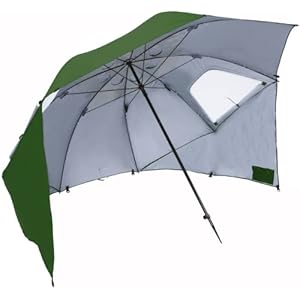
It seems to my statistically inexpert eye that the kittiwakes have had a good year. There are many pretty juveniles about.

 Just below us a pair of herring gulls were feeding young. Mum [or dad] is just flying in here.
 Finally I spotted to our right a linnet on the cliff top singing. A long way off from the comfort of my chair but here he is - last shot of the day.
 249 UK; Yorkshire 120
Wednesday 25th July 2012: Moth trap
I made a moth trap!
I found some help on the internet at http://www.meades.org/moths/moths.html#Trapping_Moths. See this website for the method - although I did a few things my own way.
Basically you need the following:
· One sheet of 5mm or 6mm plywood cut into:
- one 40 cm square – base,
- two 30 cm x 40 cm - ends,
- two 30 cm x 39 cm - sides,
- one 7 cm x 39 cm - support for light.
· One sheet of 2 mm Perspex [I used horticultural glass] cut into:
- two 30 cm x 39 cm,
- [one 30 cm x 30 cm for rain cover if desired.]
· 2 cm square baton cut into:
- two 35 cm lengths - at bottom of ends,
- two 39 cm lengths - at bottom of sides,
- four 25 cm lengths - along edges,
- four 6.5 cm lengths - two for Perspex/glass support, two for light.

Perhaps I'll catch one of these. This is an angle shades moth from our garden.
Here's a couple of iphotos of the trap.


After the first night of trapping using the little halogen bulb, I had caught these moths plus some other micro moths that flew off! Many thanks to moremoth and chrisbrooks from ispot for the identifications.


Scalloped oak: crocallis elinguaria
Riband wave - non banded form: idaea aversata ab. remutata
 Gothic: naenia typica

Species unknowm
Sunday 22nd July 2012
A wild goose chase
Semipalmated sandpiper reported at Nosterfield mid-morning. Not a lifer but a top drawer bird. Scampered up the A1M. Saw the bird. Didn't look dark enough compared with others I'd seen. And maybe a bit too big. Still it was a good bird - smaller than the dunlin admittedly. I set off south, thinking about bearded tits at Blacktoft...
The pager announced after a while that the experts had decided it was a sanderling in sort of remnant summer plumage. Not a tick at all. I wasn't surprised. Didn't run up and down the waterline like a sanderling... That's birding. I'm sure the experts were right.
I got to Blacktoft by about one o'clock. Chatted to various people and watched the waders at Marshland - spotted red, red, ruff, dunlin and greensands. Eventually a greensand came closer than I had ever been to one before. Let the pictures tell the story.

 Keeping an eye on what's going past overhead.

 How a bird's shape can change when it goes into alert mode.

 Then it flew - almost out of the picture frame!

 I've been trying for a very long time to get really great marsh harrier photos. Suddenly, late afternoon I got very close indeed.


 Thanks for that, youngster!
 I also saw my first beardies of the year and baby water rails! What a good day in the end. Time to make my way home like these old fellows...
 Yorkshire 2012: 117; UK 246 and counting.